How to clean your contact lenses - Video
Cleaning Your Contact Lenses
"Taking proper care of your contact lenses is essential not only for keeping on top of your own eye health but also for ensuring that your lenses remain comfortable throughout their wear time.
Cleaning your contact lenses regularly is an important daily routine for certain types of contact lenses! It helps to remove dirt, debris, and bacteria but also reduces the risk of infections and/or other complications." Mr John Dreyer Optometrist Bsc(Hons), MCOPTOM, DipCLP
Here, he shares with you how and why cleaning contact lenses is so important.
Our Optometrist's Advice
“Reusable contact lenses need more than a quick rinse. Cleaning helps remove deposits and debris, while proper disinfection helps reduce harmful microorganisms that can cause eye infections.
Use the care system recommended for your lenses, always use fresh solution and never use water to clean or store them. If you use a hydrogen peroxide system, make sure the full neutralisation process is complete before putting your lenses back into your eyes.”
John Dreyer BSc (Hons), MCOptom, DipCL
Optometrist & Clinical Content Reviewer
Types of Contact Lenses That Should Be Cleaned
Before getting into the cleaning process, it's important to know which types of contact lenses require regular cleaning. Generally, contact lenses can be broken down into 5 main categories:
- Daily Disposable Contact Lenses
- Weekly replacement contact lenses
- Two-weekly replacement contact lenses
- Monthly replacement contact lenses
- Extended wear lenses
Not all contact lenses require the same cleaning routine. The care your lenses need depends on their replacement schedule, whether they are approved for overnight wear, and the care system recommended for them.
Daily disposable contact lenses are designed to be worn once and discarded after removal. They should not be cleaned, stored, and reused.
Weekly, Two-weekly, and Monthly contact lenses are reusable. When worn on a daily-wear basis, they should be removed, cleaned, disinfected and stored in fresh contact lens solution according to the instructions for your lenses and care system.
Extended-wear contact lenses are approved for overnight wear for specified periods, but this does not mean they never require cleaning. If reusable extended-wear lenses are removed and will be worn again, follow the cleaning and disinfection instructions recommended for that lens and your prescribed wearing schedule.
Sleeping in lenses increases the risk of serious eye infection, so extended wear should only be undertaken on the advice of your optometrist.
Different lenses and care systems can require different handling, so always follow the instructions provided by your optometrist and the manufacturers of your lenses and contact lens solution.
Keep all contact lenses away from water. Remove your lenses before swimming, showering or using a hot tub. If water accidentally comes into contact with your lenses, remove them as soon as possible. Discard daily disposable lenses; reusable lenses should be cleaned and disinfected overnight before being worn again.
The Importance of Cleaning Contact Lenses
Cleaning and maintenance are important tasks for weekly, two weekly and monthly disposable contact lenses A good cleaning routine will help to ensure both the comfort and health of your eyes.
Contact lens cleaning isn't just a question of keeping your contact lenses dirt-free, it's also vital for maintaining good ocular health.
Every day, we are exposed to elements that can potentially harm our eyes and shorten the lifespan of contact lenses, such as dirt, dust, fungi, and bacteria in the air around us. If these end up in our eyes, they can cause problems such as discomfort, inflammation, ulceration, and even infection.
Contact lenses can slowly accumulate a build-up of proteins and calcium deposits that come from your tears. This can cause the lenses to become cloudy, thus impairing vision. Deposits on reusable lenses can also affect their surface and wearing comfort, which is another reason lenses should be cleaned, disinfected and replaced according to the recommended schedule.
One rare but serious condition, acanthamoeba keratitis, is caused by a microscopic organism and is an increased risk for contact lens wearers who have not kept their lenses and lens cases adequately clean. This infection can lead to severe pain, and in the most acute conditions, could require surgical treatment.
Cleaning Contact Lenses with a Multipurpose Contact Lens Solution
Multipurpose solutions are designed to streamline the cleaning process and can be helpful when it comes to a wide range of actions such as cleaning, rinsing, disinfecting and ultimately storing contact lenses. See below for a step-by-step guide on how to clean your contact lenses using a multipurpose solution:
- Wash your hands: Before you begin, you need to thoroughly wash your hands with soap and water, then dry them with a lint-free towel to prevent any contamination of dirt or bacteria when it comes to handling your lenses.
- Remove one lens: Gently remove one lens from your eyes, taking care so that you don’t touch the lens with your fingernails.
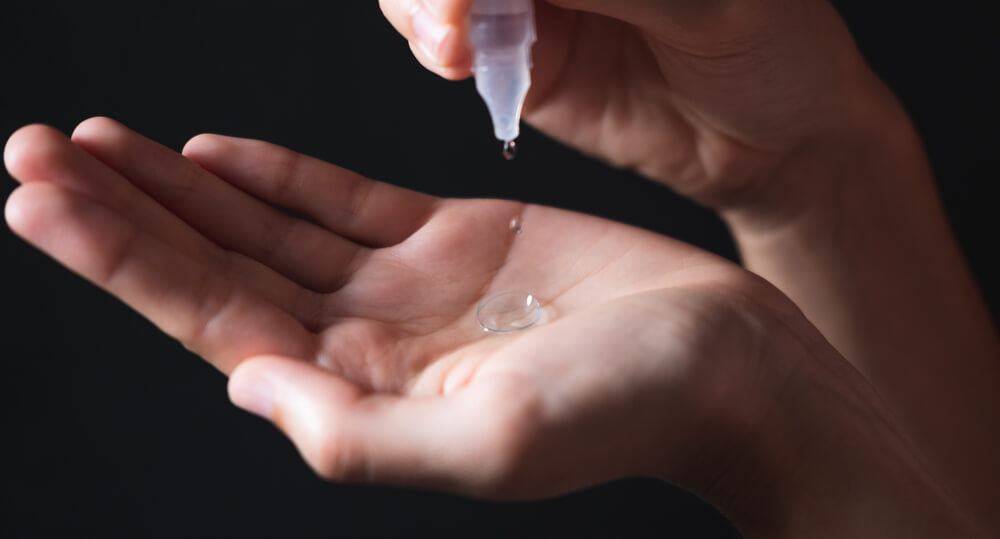
- Place the lens in your palm: Hold the lens in the palm of your hand, cupping your hand slightly to form a tiny bowl.
- Apply the solution: Pour a generous amount of multipurpose solution onto the lens so that the lens is completely submerged in the solution.
- Clean and rinse the lens: Apply fresh multipurpose solution and gently rub and rinse the lens according to the instructions supplied with your particular solution. Rubbing and rinsing helps remove deposits and debris before disinfection. Never use tap water or saliva to clean or rinse contact lenses.
- Store the lens: Place the cleaned lens in the correct compartment of a clean contact lens case filled with fresh disinfecting solution. Make sure the lens is completely covered and follow the manufacturer's instructions for the required disinfection time.
- Repeat the process: Repeat the same procedure for the other lens, using fresh solution.
- Replace the solution daily: Discard used solution after every use. Never reuse old solution or “top off” the solution already in your case with fresh solution, as this reduces the effectiveness of disinfection.
Hydrogen Peroxide Contact Lens Cleaning System
Hydrogen peroxide-based systems are an alternative to multipurpose solutions for cleaning and disinfecting reusable contact lenses. They are generally preservative-free, so an optometrist may recommend one for some people who are sensitive or allergic to preservatives found in certain multipurpose solutions.
With a hydrogen peroxide system, the contact lenses are deliberately placed in the peroxide solution using the special lens case supplied with the product. The peroxide then has to be fully neutralised before the lenses can safely be put back into your eyes. Depending on the system, neutralisation takes place using a neutralising disc incorporated into the case or through a separate neutralisation step.
Never put unneutralised hydrogen peroxide directly into your eyes or insert lenses before the neutralisation process is complete. Doing so can cause severe stinging, burning, irritation and potentially damage the eye.
Always use the special case supplied with the system, allow the full neutralisation time specified by the manufacturer, and follow all instructions carefully. Speak to your optometrist before changing from one contact lens care system to another.
Summary
Taking proper care of reusable contact lenses is an important part of protecting your eye health. Always clean, disinfect and store your lenses using the care system recommended for them, use fresh solution each time and keep your lenses and lens case away from water.
If you prefer not to clean and store reusable lenses every day, daily disposable contact lenses may be worth discussing with your optometrist. A fresh pair is worn each day and discarded after removal, so no cleaning or storage system is required.
If you are unsure how to care for your particular lenses or which cleaning system you should use, ask your optometrist for advice.
Always consult your eye care professionals if you have any concerns or questions whatsoever about cleaning and storing your contact lenses.