Common Childhood Eye Conditions
When a child is born, their vision is not fully developed, so although your child may have had perfect eyes and vision at birth, that doesn't mean that they will not develop an eye condition as a toddler or at some time throughout their childhood.
The sooner you recognise an issue with your child's eyes or vision, the sooner treatment or correction can begin. This is particularly important with children, as some childhood eye conditions can have long-term or even permanent effects on vision if they're not identified and treated early.
Being able to spot when your child is having problems with their vision can not just help them medically, but can have social, academic and mental health benefits.
There are some simple signs and symptoms to look out for that will indicate your child may be having eye or vision issues, and will indicate that you should take your child to see a doctor or an Optometrist.
A word from our optometrist: "Many childhood eye conditions are highly treatable, especially when they're identified early. The challenge is that young children often don't realise their vision is different because they've never experienced normal sight. That's why it's so important for parents to recognise the warning signs and attend routine eye examinations, even if their child isn't complaining. Whether it's a simple stye, a squint, or something more serious such as a cataract, early assessment gives the best opportunity to protect your child's vision and support healthy visual development."
Signs And Symptoms Of Vision Problems In Children
- White instead of black pupil
- White pupil visible in photographs
- An eye turning in or out
- Redness or tearing
- Light sensitivity
- Frequent or continual eye rubbing
- Slow to focus on objects
- Seeing double
- Squinting
- Inability to see objects clearly at a distance
- Inability to focus on close objects or difficulty reading
- Frequent movement of the eyes
- The eyes do not track an object simultaneously
- Complaining of headaches
- Having trouble seeing the blackboard
- Sitting too close to the TV
The above list is a general set of signs and symptoms that would indicate your child may be having problems with their eyes or their vision and should always be checked out, however, there are many childhood vision problems with their own set of signs and symptoms, so are easier to diagnose and react to. Here we list the most common childhood eye conditions.
Chalazion
What Is a Chalazion?
A chalazion is a harmless, painless bump just inside the edge of either the upper or lower eyelid. They often develop after a stye has settled, mostly healed and is no longer infected.
Basically, a benign cyst grows out of one of the Meibomian glands in the eyelid, which are responsible for producing the oily substance that lubricates the eyes. Although a Chalazion may cause the eyelid to appear red and swollen, it poses no real risk.
Signs And Symptoms Of A Chalazion
- Painless swelling in the eyelid
- Swelling of the conjunctiva (the membrane that covers the surface of the eye and the inner surface of the eyelid)
- Blurred or distorted vision
- A red area on the inside of the eyelid
Stye
What Is A Stye?
A stye is a swollen and infected Meibomian gland within either the upper or lower eyelid. These glands normally secrete small amounts of an oily liquid that helps lubricate the surface of the eye and prevent tears from evaporating too quickly. When these glands become clogged, they can fill with this fluid and become infected.
A stye is not very dissimilar to a common pimple.
Signs And Symptoms Of A Stye
- Painful swelling of the eyelid
- A red lump on the eyelid, similar to a pimple or boil
- Swelling of the eyelid
- Excessive tearing
- Discharge from the eye
- Sticky or stuck eyelids in the morning
A Chalazion and a Stye are very similar and sometimes can refer to the same thing. When the opening of the Meibomian gland becomes blocked, the fluids can back up, swell, and even become infected. This is called a stye. Once the infection is gone, but the build-up remains, it is then referred to as a Chalazion.
Differentiating between a Chalazion and a stye can be difficult, as they can look very similar, but there are a few things that define them
| Presenting Symptoms |
Chalazion |
Stye |
| A Swelling of the eyelid |
✔️ |
✔️ |
| On the edge of the eyelid |
❌ |
✔️ |
| In the middle of the eyelid |
✔️ |
❌ |
| Painful |
❌ |
✔️ |
| A "head"/yellowish spot in the centre |
❌ |
✔️ |
| Alters vision |
✔️ |
❌ |
Conjunctivitis
What Is Conjunctivitis?
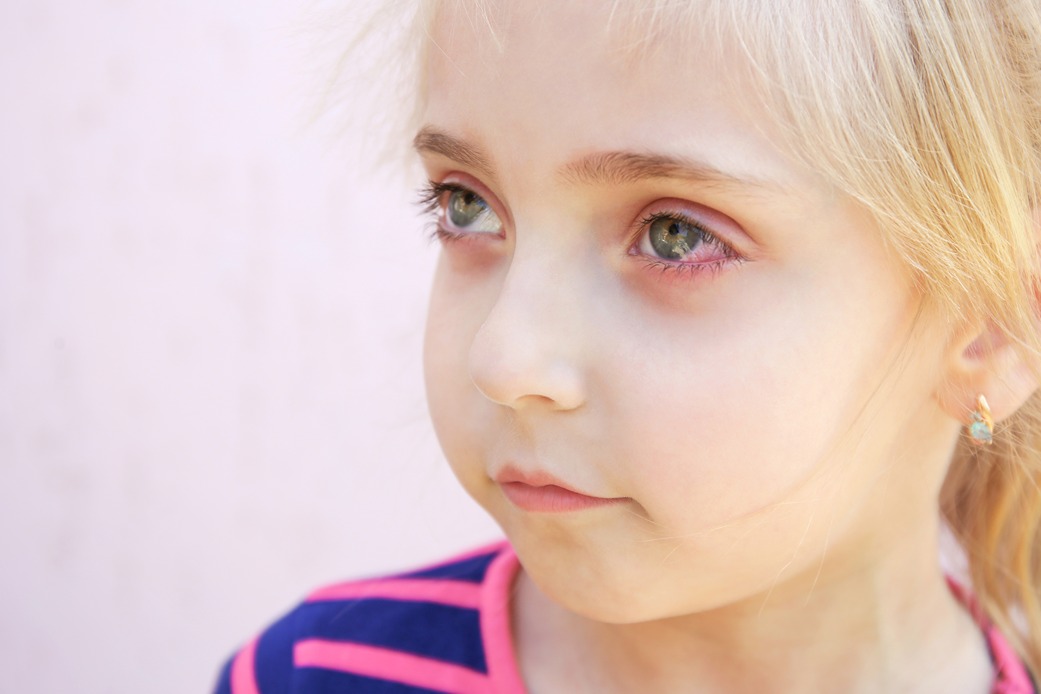
Conjunctivitis (kun-junk-tih-vy-tus) is often referred to as pink eye, as it causes the eye to become pink or red, and is a common condition that causes the inflammation of the surface of the eye and the tissue that surrounds it.
According to the National Library of Medicine, it is estimated that approximately 1% of all consultations in primary care are due to conjunctivitis.
Signs And Symptoms Of Conjunctivitis
- Red or Pink eye or eyes
- Watery eyes
- Burning or itching
- Mild swelling to the eye and surrounding tissue
- Inflamed inner lids
- Blurred vision
- Pus-like or watery discharge around the eyelids
- A yellowish discharge from the eye causes crusting around the eyelids in the mornings
Conjunctivitis is very contagious if it is caused by a virus or a bacterium, however, if the pinkeye is caused by an irritant such as animal fur, dust or pollen, then it is unlikely to be infectious. It is important to determine the cause of pinkeye, especially in children, as if it's infectious, children are at far greater risk of spreading the condition.
If you are unsure whether the pinkeye is infectious or not, it is best to assume that it is infectious and act accordingly.
Whether a child should stay away from school or nursery depends on the cause of the conjunctivitis. Parents should follow advice from their GP, pharmacist or school if the conjunctivitis is thought to be infectious. Precautions will also need to be taken to prevent the spread to other family members.
Do
✔️Wash your hands regularly in warm soapy water
✔️Use a new face cloth and hand towel daily
✔️Wash face cloths, hand towels and pillows regularly in hot soapy water
✔️Throw away any open mascara
Don't
❌Touch or rub your eyes
❌Don't share face cloths and hand towels
❌Share eye make-up
❌Wear contact lenses
It is rare that adults would need to stay away from work.
Strabismus
What Is Strabismus?
Strabismus, which is commonly referred to as a squint or cross-eyed, is a condition whereby the eyes do not work in unison, commonly causing one eye to move in a different direction. Most commonly seen in infants and young children, but can also develop in adults
Strabismus can present itself in one of four ways
- The eye turning inwards - Convergent Squint or Esotropia
- The eye turning outwards - Divergent Squint or Exotropia
- The eye turning upwards - Vertical Squint or Hypertropia
- The eye turning downwards - Vertical Squint or Hypotropia
Signs And Symptoms Of Strabismus
An eye that looks "crossed"
Eyes that do not move together
Tilting the head sideways to see clearly
Poor depth perception
Double vision
Squinting
Unfortunately, Strabismus does not get better left alone; it needs medical intervention. Untreated Strabismus can lead to poor vision, a squint, amblyopia or lazy eye. A child over 4 months of age whose eye does not track objects uniformly should see an Optometrist or doctor who can check for Strabismus and initiate treatment.
According to the Royal National Institute for the Blind (RNIB) squints are common, affecting around 2-3 per cent of children in the UK
Amblyopia - Lazy Eye
What Is Amblyopia?
Amblyopia is the medical term for Lazy Eye and refers to the disorder whereby the vision does not develop properly in one eye, even when corrected by glasses or contact lenses. A lazy eye develops when the connections in the brain responsible for vision are not formed correctly during the first 8 years of a child's life.
The most common causes of Lazy Eye are Strabismus, or squint or Ptosis (a droopy eyelid). According to Medical News Today, in a 2013 study of 107 children with ptosis, researchers noted lazy eye in around 1 in 7 of the participants.
According to the NHS, it's estimated that 1 in 50 children develop a lazy eye.
Signs And Symptoms Of Amblyopia

- Squinting
- Closing one eye to focus
- Tilting or turning the head sideways
- One eye that wanders or turns inward or outward
- Eyes that appear not to work in unison
Amblyopia, or Lazy Eye, is not always obvious, children may have a poor depth of perception or struggle to see things clearly, in many cases parents or carers do not realise their children have a Lazy Eye and it is often first recognised in an eye exam This is why it is important to get children's vision tested somewhere between the ages of 3 and 5 years of age.
To find out more about Lazy Eye and the treatments available, check out the NHS site
Nystagmus
What Is Nystagmus?
Nystagmus is a medical condition causing constant involuntary movement of the eyes. The eye movements are up and down, but can also be side to side or even circular in nature. This movement can cause visual impairment, reduced ability to judge depth and speed, reduced vision, and make it difficult to recognise faces.
Nystagmus can present itself in the first few months of a child's life, in which case it is referred to as Infantile or Congenital Nystagmus. If it presents itself later in life, this is referred to as acquired nystagmus.
According to Nystagmus Network, nystagmus is the most common issue causing visual impairment in children, and it affects approximately 1 in 1,000 people.
Signs And Symptoms Of Nystagmus
Constant involuntary movement of the eyes
Dizziness
Poor vision
Reduced ability to judge depth and speed (the sufferer may appear clumsy)
Sensitivity to light
Difficulty seeing in the dark
Problems with balance
Feeling the world is shaking (only in late onset)
Unfortunately, there is no cure for nystagmus, but it can be managed, and there are techniques and aids available to get the best vision possible. For further information, check out RNIB and Nystagmus Network.
Epiphora
What Is Epiphora?
Epiphora is a condition whereby the eyes water excessively, this can be caused by the production of excessive tears or a blocked tear duct and is not an uncommon problem in the very young and the elderly.
Babies are known to produce excessive tears at times, add this to the fact that their tear ducts are relatively narrow, and it's no big surprise that a baby is more prone to epiphora or watery eyes. The inability to drain all the tears produced can lead to babies developing "gunk" in the corner of their eyes, even when no infection is present.
Epiphora can also be caused by a blocked tear duct, known as nasolacrimal duct obstruction (NLDO), which, according to the American Academy of Ophthalmology (AAO), affects approximately 5% of infants. Although unsightly, most blocked tear ducts resolve naturally during the first year of life without treatment.
If you are concerned about your child's eyes, always seek out medical advice.
Signs And Symptoms Of Epiphora
Excessive watery eyes
Swelling around the eye(s) or the side of the nose
Blurred vision
Tenderness
Red eye(s)
Light sensitivity
Ptosis
What Is Ptosis?
Ptosis, pronounced - toe ses - is the drooping of an upper eyelid or eyelids. The amount of drooping can range from very mild, whereby it's hardly noticeable, to severe, whereby the drooping eyelid covers much of the eye. This becomes a problem when the drooping eyelid covers the pupil, as this can affect vision.
Ptosis is seen in children and adults. If a child is born with ptosis, this is called congenital ptosis and is normally indicative of an issue with the muscles that lift the eyelid. A child born with ptosis can often have other eye-related problems such as eye muscle disease, eye movement issues, tumours, etc and develop eye-related problems such as amblyopia (lazy eye) or a squint.
Signs And Symptoms Of Ptosis
- A drooping eyelid or eyelids
- Problems with closing the eyes or blinking
- Eye muscle fatigue
- Poor vision in the affected eye
- Tilting the head backwards to improve vision
Fortunately, in most cases, ptosis can be treated. If the ptosis is mild in young children, it is often just monitored initially to see how it develops and to assess if it affects vision, in more severe cases, surgery may be the only option to prevent future vision problems.
If you suspect your child has ptosis, make an appointment to see your Optometrist.
Childhood Cataracts
What Is A Childhood Cataract?
Many people associate cataracts with the elderly, however, they can develop at any age. Fortunately, childhood cataracts are rare, only appearing in 1-6 per 10,000 babies or children.
A cataract is caused when the lens in the eye or eyes becomes less transparent and more opaque, which leads to the vision in the affected eye(s) becoming cloudy or hazy. The pupil can appear a greyish/white colour as if a layer of skin has grown over the eye, but this is not the case, and the whiteness is actually a reflection of the light from the cloudy lens.
Cataracts in children can be divided into two main categories
- Congenital Cataracts -This is when a baby is born with cataracts or they appear shortly after birth.
- Infantile, Juvenile, and Developmental Cataracts - These cataracts develop in older babies or children.
What Causes Childhood Cataracts?
The causes of childhood cataracts can be due to a number of reasons, and may include
- Genetic conditions such as Down syndrome
- Inherited from either parent
- Infections during pregnancy, such as Rubella, and to a lesser extent, Chicken pox, herpes simplex
- Eye injury or eye trauma after birth or during childhood
- Reactions to drugs used by the mother during pregnancy - this can include prescribed drugs
Signs And Symptoms Of Childhood Cataract
Signs and symptoms of a cataract can vary from child to child and may include one or more of the following-
- Poor vision, such as difficulty recognising and tracking objects with their eyes
- A squint - eyes pointing in different directions
- Nystagmus - Rapid eye movements or eyes that appear to wobble
- A white or greyish pupil
- Glare from lights
- Seeing "Halos" around objects
- Blurry or Cloudy vision
- Leukocoria - A pupil that appears white when a flashlight is shined at the eye
Many of the signs of a cataract can also be a sign of other eye or health problems. If you notice any of the above signs and symptoms, or your child complains of any of these, you should see your Optometrist or GP for tests and diagnosis.
A short note here on Leukocoria - If you notice a white pupil in photographs, arrange an urgent eye examination.
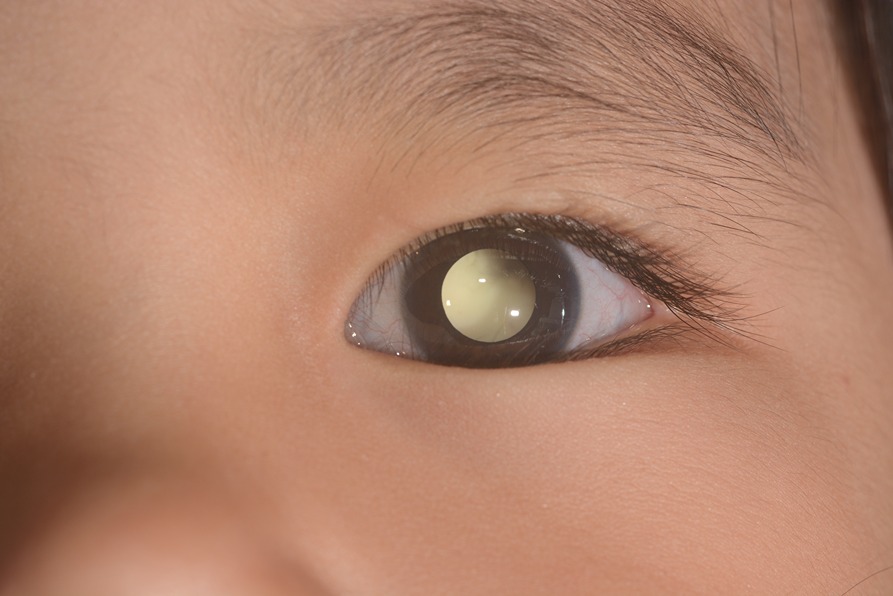
In photos, the pupil is normally black in colour, but can be red if a flash or bright light has been used. However, if you notice that your child's eye or eyes appear white in photos, you should take them to an Optometrist or family doctor, as white eyes in photos can be the first sign of symptomless eye conditions such as:
Cataracts apply to babies, children and older people
Retinoblastoma - eye cancer
Coat's disease - weak or damaged blood vessels in the eye
Retinal detachment
Other retinal abnormalities
A child born in the UK will have their eyes tested several times before they start school,
- The first time will be shortly after birth and normally within 72 hours as part of their "newborn" physical examination.
- The second test will be between 6 and 8 weeks at their follow-up test, which should pick up anything that may have been missed or not present at their "newborn" test.
- Thirdly, when your child is approximately 2 years of age, you will be asked if you have any concerns about your child's vision during their health and development checkup.
If you notice any changes or abnormalities with your children's eyes, or if your child begins to complain of changes to their vision, you should always check this out with your Optometrist or family doctor.
Did you know a child does not need to be able to recognise their alphabet or read to have a successful eye test? An optometrist has a range of specialised equipment and child-friendly techniques to assess a baby's or young child's vision and eye health, even before they're able to recognise letters or read.
So that all children have access to free eye tests, they are provided free on the NHS in the UK.