
What Is Conjunctivitis?
Conjunctivitis, often referred to as pink eye, is a common condition that causes inflammation of the surface of the eye and the tissue that surrounds it. Conjunctivitis is the most commonly seen eye disease by general practitioners, and is estimated to account for approximately 1% of all consultations in primary care.
The symptoms of conjunctivitis include sensations of pain, burning, and itchiness, and a red or pink appearance of the affected eye. There may also be mild swelling, as well as a light fluid discharge, which can dry and become crusty overnight. This can cause the infected eye to become sealed closed in the morning, but this can be remedied with the application of a warm, damp, clean cloth.
Many cases of viral conjunctivitis will clear up in one to two weeks' time, although some can take longer. Bacterial conjunctivitis often improves more quickly with appropriate treatment. "In the event that the symptoms continue to worsen, or have not reduced in that period, it's possible that another condition is causing them, and that the diagnosis of conjunctivitis was inaccurate. Some fungal and microbial infections can exhibit similar symptoms at first, which may not differentiate themselves until sufficiently developed. It's always important to seek out professional medical attention any time there is an eye-related health problem.
A message from our optometrist: "Although conjunctivitis is often referred to simply as "pink eye"' it's actually a group of conditions with different causes, including viruses, bacteria, and allergies. The treatment depends on what's causing the inflammation, so it's important not to assume that every red eye needs antibiotics. Most cases improve with good hygiene and supportive care, but if you develop severe pain, sensitivity to light, reduced vision, or wear contact lenses, you should seek professional advice promptly to rule out more serious eye conditions."
What Causes Conjunctivitis?
Conjunctivitis is an inflammation of the conjunctiva, a thin, transparent layer covering the surface of the inner eyelid and the front of the eye. It can affect people of all ages, although children seem to be particularly susceptible.
More often than not, conjunctivitis is caused by a viral infection; however, a bacterial form of the disease also exists. It's even possible for it to be triggered by common allergens, such as pollen or animal dander.
There are several different viruses that can cause conjunctivitis, the most common being adenoviruses.
One of the most serious forms of conjunctivitis is caused by the herpes simplex virus, the same virus that leads to cold sores in and around the mouth.
A less common, but quite serious form, called acute hemorrhagic conjunctivitis, is caused by enteroviruses and was only first discovered in 1969. It's potentially the most contagious form of the disease, and has caused several large epidemics throughout the world since its discovery.
As a group, bacterial forms of conjunctivitis are less common than viral forms, however, not so much as to be considered rare. Much like the viral category, the bacterial form is also caused by several different pathogens. The three most common of them are Staphylococcus aureus, Streptococcus pneumoniae, and Haemophilus influenzae. It's possible for these forms of the disease to last much longer than 2 weeks, and possibly even become chronic. However, with proper antibiotic treatment, these are also the most curable forms of conjunctivitis.
Even less common than bacterial infections are allergen-triggered forms of conjunctivitis. These can be caused by any substance, biological or chemical. Pollen, animal dander, perfumes, make-up, dust, skin mites, and even certain types of eye drops can cause a severe allergic reaction. While not at all contagious, this form can be difficult to treat if the allergen that's triggering the condition isn't known, if it is known, eliminating it from the environment is an important step in treating the symptoms.
What Are The Signs And Symptoms Of Conjunctivitis?
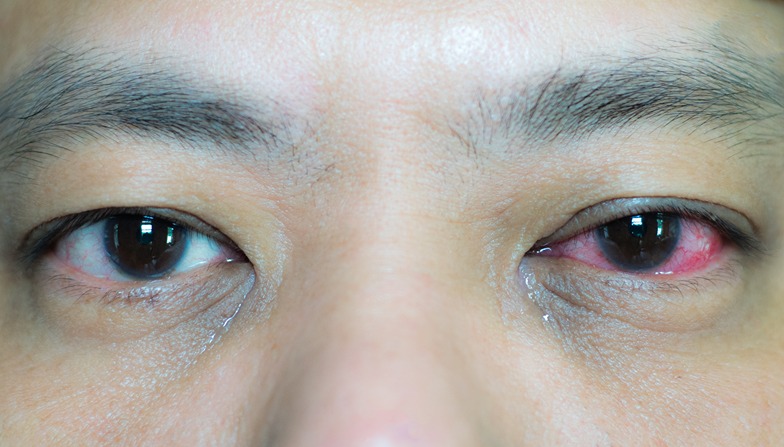
A red or pink appearance to the eyes is a primary sign of conjunctivitis and what gives it its common name "pink eye," but there are other signs and symptoms that indicate conjunctivitis
- Red eye or eyes
- Watery eye or eyes
- Burning or itching
- Mild swelling of the eye and surrounding tissue
- Inflamed inner lids
- Blurred vision
- Pus-like or watery discharge around the eyelids
Some or all of these are apparent in all forms of the disease, no matter the individual cause.
Conjunctivitis usually does not cause permanent changes in vision, although temporary blurring is common because of tears or discharge. If your vision becomes significantly reduced, seek urgent assessment as another eye condition may be present.
There are other symptoms that each of the three forms of conjunctivitis is individually associated with.
Viral conjunctivitis is often seen in conjunction with signs of upper respiratory infections, or the common cold. The eyes are typically more watery than in other forms, and while it may only start with one eye, it can very easily spread to the other. Compared to the redness caused by other forms, viral conjunctivitis is typically a mild pink and a cause for the common name of pink eye.
Bacterial conjunctivitis develops very rapidly and causes a very red appearance on the eye. There is more swelling and discharge, also. This discharge is what causes the dry crust that often holds eyelids closed, especially in the early mornings. While the bacterial form is less likely to spread from one eye to the other than the viral form, it is still common, it may take 3-5 days to occur. There may even be sensations of a foreign body in the eye, but this is almost always caused by the infection itself.
Symptoms of allergen-triggered conjunctivitis are more varied from patient to patient. While all of the base-level symptoms are likely to be present, including red, watery, itchy eyes, their levels can vary in relation to one another. One person may have very red eyes that only itch a little, while another has little to no redness but high levels of watery discharge and itchiness. This is primarily due to the individual nature of allergic reactions, as well as the wide range of possible allergens that may trigger the condition.
Is Conjunctivitis Contagious?
Conjunctivitis can be highly contagious, it is important to know what is causing the infection. If it is viral or bacterial, you will need to take strong action to prevent spreading the infection, however, if conjunctivitis is caused by an irritant such as make-up, animal fur, dust, pollen, etc then it is unlikely to be infectious.
If you suspect you have conjunctivitis and can not be seen quickly by a GP or Optometrist, is it best to assume your conjunctivitis is contagious and take the following precautions:
Do
✔️Wash your hands regularly in warm soapy water
✔️Use a freshly cleaned face cloth and hand towel daily
✔️Wash face cloths, hand towels, and pillows regularly in hot soapy water
✔️Throw away any open mascara
Don't
❌Touch or rub your eyes
❌Don't share face cloths and hand towels
❌Share eye makeup
❌Wear contact lenses
These precautions will need to be in place until your conjunctivitis has cleared completely. If a child has viral or bacterial conjunctivitis, parents should follow the advice of their GP, pharmacist, nursery or school, as exclusion policies can vary. It's advised to avoid play dates to prevent cross-infection with friends. Good hand hygiene remains the most important way of preventing it spreading. Generally, there is no reason why adults need to stay away from the workplace.
How Is Conjunctivitis Treated? Eye drops, Antihistamines, Or Other Solutions?
The recommended treatment of conjunctivitis is dependent on its type. Viral forms usually resolve on their own in less than a week. Medications like antihistamines can be taken to minimise the symptoms, but will do nothing to treat the actual infection. Bacterial forms will also recover on their own, usually in less than a week. However, with antibiotic eye drops, the recovery period will likely be several days shorter. For allergic conjunctivitis, a combination of antihistamines to treat the symptoms and elimination of the allergen from the environment will help. Unlike the infectious forms, allergic conjunctivitis won't resolve on its own and may persist as long as the patient is exposed to the offending allergen.
Regardless of the form, anyone suffering from conjunctivitis who regularly wears contact lenses should remove them for the duration of the infection and dispose of the lenses that were worn when symptoms began to show. It is also important to replace the storage case, as the infection can remain in there. The possibility of reinfection is high if the lenses are reused, and wearing them during the infection will cause the infection to worsen drastically. Only resume wearing contact lenses once your eyes have completely recovered and you've been advised it's safe to do so.
Conjunctivitis caused by gonorrhea or chlamydia and conjunctivitis in contact lens wearers should be treated with antibiotics.
Many remedies and treatments for conjunctivitis are available over the counter, so it is worth speaking to your pharmacist, who can offer advice about eye drops or antihistamines to help relieve your symptoms. Avoid using antibiotic eye drops unless they've been recommended by a healthcare professional, as they aren't effective against viral or allergic conjunctivitis. If you need treatment for a child under 2, you'll need a prescription from a GP.
How Can Conjunctivitis Be Prevented?
Most forms of prevention come down to good personal hygiene. Some tips include:
- Wash your hands regularly, especially after coughing, sneezing, or shaking hands with other people.
- Avoid touching your eyes as much as possible.
- Practice safe contact-lens wearing habits, remove them as recommended, clean them before and after storing, and replace them as advised by your Optometrist.
- Clean or regularly replace your contact lens cases. Always use fresh solution
- Never swim or bathe while wearing contact lenses.
Allergen-triggered conjunctivitis isn't communicable, so hygiene plays less of a role in its onset. Instead, speak with your doctor about your personal allergies and what methods work best for limiting both their symptoms and your exposure to them.
Don't forget, if you have any worries or concerns, speak to your optometrist, or you can check out our Eye Help pages, which are available to everyone. However, if you order lenses from us, you will have access to our contact lens aftercare pages and our optometrist from within Your Account