The Hidden Dangers of Counterfeit Sunglasses

Sunglasses are an easy buy. You see a nice style, the price looks good and you assume they will do the job. Fake pairs count on that. They copy well known designs and then cut corners on the lenses and the build which introduces risk to the equation.
The Risks Associated with Counterfeit Sunglasses
Lack of UV protection
Dark lenses do not mean UV protection. Many fake sunglasses dim visible light but still let UVA and UVB through. This is why the label matters. Look for UV400 or 100% UVA and UVB. Long term UV exposure can increase the risk of cataracts, retinal damage and even eye cancer.
Poor quality materials
Counterfeit frames often use low grade plastics or metals. They can crack, warp or snap within months. Hinges loosen, arms bend and the fit gets worse fast which makes them uncomfortable to wear.
Poor visual quality
Low quality lenses can distort your vision. Wavy lines, blurred edges, uneven tint and small ripples in the lens are the most common signs. That distortion can trigger headaches, eye strain and for some people nausea on longer wear.
False economy
Fake sunglasses can feel cheap in a good way at first but they usually do not last. When you keep replacing them, the low price is no longer a bargain!
Supporting illegal activity
Buying fake sunglasses often funds dodgy supply chains which includes poor working conditions and organised crime.
Economic impact
Counterfeits also hurt legitimate businesses and jobs. Lower tax revenue then feeds through into public services.
How to Spot Counterfeit Sunglasses
Fakes are getting harder to spot but these checks still catch most of them:
• spelling mistakes on the box or leaflet
• logos that look off, printed badly or that are in the wrong place
• missing model numbers, country of origin or care information that is nowhere to be found on the packaging
• lenses with uneven tint, patchy colour or different shades left to right
• a cheap feel, loose hinges or rough finishing
• no clear UV rating such as UV400 or 100% UVA and UVB
Buying from the brand or an authorised reseller is the safest route. If the price looks unrealistic, it usually always is.
Protecting Your Eyes from Sun Damage
- Start with proper UV protection. Choose sunglasses that clearly state UV400 or 100% UVA and UVB.
- A hat helps in strong sun especially around midday.
- Try to limit direct sun in peak hours, usually 12 to 4.
- Regular eye checks can also pick up early signs of sun related damage.
Understanding the Different Types of UV Rays
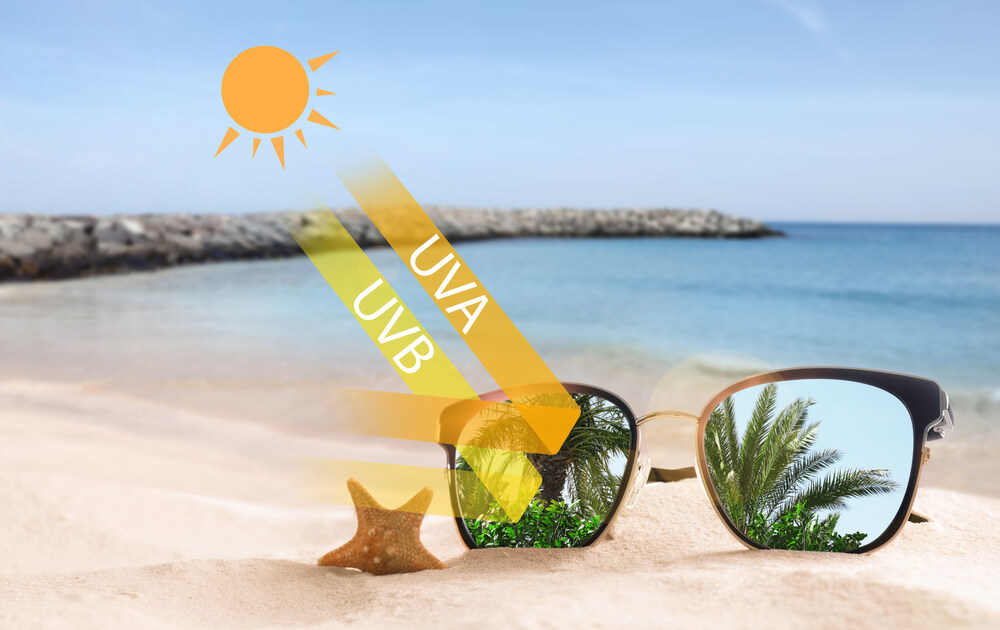
UV light is split into UVA, UVB and UVC. UVC is mostly blocked by the atmosphere. UVA and UVB reach the surface and can damage eyes over time. UVA makes up most of the UV we are exposed to and it penetrates deeper. UVB is more intense and is linked to sunburn. It can also contribute to long term eye damage. Fake sunglasses can look convincing but the lenses are often the weak point. Poor UV filtering and low quality optics can strain your eyes and increase long term risk. When you buy sunglasses, check the UV protection first. Then pick the style and the price.